Why book this drive
Why book this drive
A citadel built to disappear into the mountains
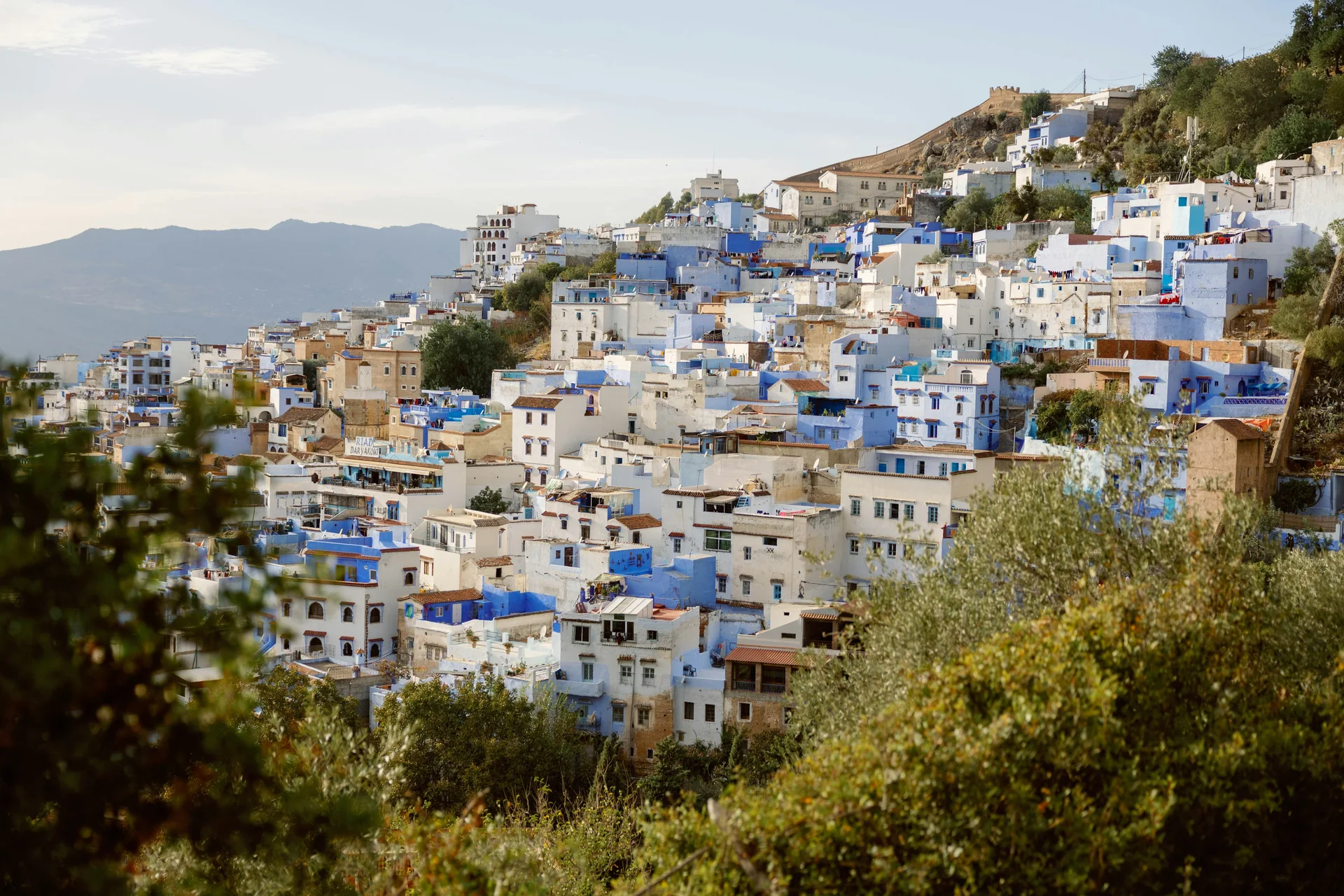
Chefchaouen was founded in 1471 by Moulay Ali ibn Rashid as a small kasbah to help resist Portuguese incursions into northern Morocco. Its position in the Rif foothills between Tétouan and Ouazzane was defensive, not scenic — a fortified town tucked against the mountains rather than a coastal city on open ground, which is part of why it stayed comparatively isolated and distinct for centuries after it was built.
Why blue, really — nobody has one clean answer
Ask five people in the medina why the walls are blue and expect five different answers, all repeated seriously. One explanation ties the colour to the town's Sephardic Jewish community, for whom blue carries spiritual meaning tied to the sky and to remembrance. Another is practical: locals say the paint keeps mosquitoes away. A third, less flattering account holds that widespread blue-washing dates only to the 1970s, applied deliberately to draw tourists rather than out of any older tradition. None of the three fully explains the others, and the plain reality is that all three keep circulating side by side, with none of them ever conclusively proven and the rest dismissed.
A third of the town, once Jewish
Sephardic Jewish families, many of whom arrived fleeing Spain's Reconquista alongside Andalusian Muslim refugees, made up roughly a third of Chefchaouen's population for generations, and the Andalusi-style quarters they helped build still shape parts of the medina. That community emigrated steadily through the 20th century; the last Jewish family in Chefchaouen left for Israel in 1968, which puts a real, specific end date on a presence that had lasted since the town's early years.
Read the rating for what it is
At 4.6 out of 5 across 3,639 reviews, this is a large sample for a long, single-day mountain drive — exactly the kind of itinerary where a bad road day, a rushed guide or a badly timed departure shows up fast in the average. A score this size holding this high over thousands of reviewers says more about how consistently the operator runs the drive than a handful of five-star reviews from a new listing ever could.
The walk through the blue
The walk through the blue
Almost everyone who spends a few free hours in Chefchaouen's medina ends up tracing some version of the same five stops. Below is the order that keeps the walking sensible, with a genuine shade of the town's blue behind each one — the paint is not one colour but many, mixed and touched up house by house.
The photo lanes
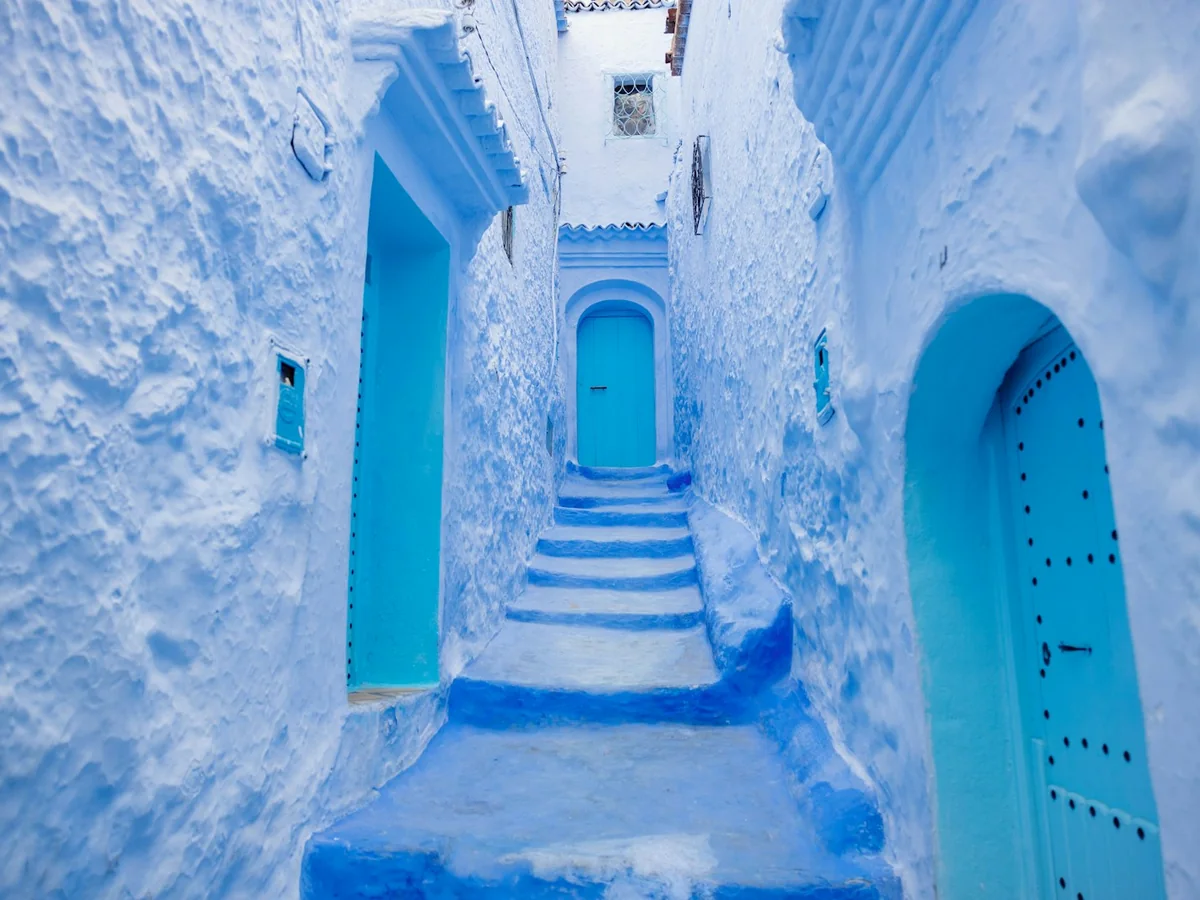
The narrow stepped alleys above and around the upper medina, indigo washed high up the walls over white below, repainted by residents rather than by any municipal crew — the single most photographed stretch of the town, and noticeably quieter before mid-morning.
Plaza Uta el-Hammam
The medina's main square, ringed by café tables, the kasbah's earthen walls on one side and the Great Mosque's unusual octagonal minaret on the other — the natural centre to get your bearings before heading up into the lanes.
The kasbah
The original 15th-century citadel just off the square: rammed-earth walls, ten towers, and a small museum inside now, with a garden courtyard and a tower view that lays out the whole blue hillside at once.
Ras el-Maa
The spring at the medina's eastern edge, the town's original water source, where a stone channel still runs and where residents wash clothes and fill containers much as they always have.
The Spanish Mosque viewpoint
A disused 1920s hilltop mosque a steep 30 to 40 minute walk above the medina, kept mainly now for the view — the whole blue town laid out below against the Rif, best in the last light if your free time stretches that far.
Chefchaouen is a lived-in town, not a film set — people sleep, cook and raise children behind those blue doors. Ask before photographing anyone directly, and the same courtesy applies to stepping inside a private doorway for a photo; a friendly nod and a few seconds' wait is usually all it takes.
The day, hour by hour
The day, hour by hour
An approximate shape of the day rather than a fixed timetable — GetYourGuide confirms your actual pickup point and time with the booking.
- ~07:50
Pickup in Fez
A shared minibus collects guests from hotels and riads within a mapped central Fez zone before heading north out of the city.
- ~08:15
Into the Rif
The road climbs out of Fez toward the Rif Mountains, with a single short comfort stop roughly midway for water and a bathroom break — no shopping detours on the way up.
- ~11:30
Arrival in Chefchaouen
After roughly three and a half to four hours on the road, the minibus drops the group at the edge of the medina, with about four hours free to explore before the return departure.
- ~12:00
Plaza Uta el-Hammam and the kasbah
Most visitors start at the main square, orient themselves against the kasbah walls, and decide from there how far up into the blue lanes to walk.
- ~13:30
Free time in the medina
The rest of the window is unstructured — the photo lanes, Ras el-Maa, lunch on your own account, or the climb to the Spanish Mosque viewpoint if you have the legs and the time for it.
- ~15:30
Return departure
The group reassembles at the pickup point for the drive back to Fez, with the same single comfort stop on the way down.
- ~19:30
Back in Fez
Drop-off is roughly twelve hours after pickup, door to door, with the exact time depending on the day's traffic on the mountain road.
The town, the etiquette, and what isn't included
The town, the etiquette, and what isn't included
A few things worth knowing before you assume they are, or are not, part of the day.
Four hours is enough to see it, not to linger everywhere
The medina is compact enough to see its main landmarks in four hours, but the climb to the Spanish Mosque alone can take well over an hour there and back. Decide early whether the viewpoint or a slower walk through the lower lanes matters more to you, since a single free-time window rarely allows both at an unhurried pace.
Lunch is on your own account
The listing's inclusions cover the guide and the return transport, not a meal in Chefchaouen itself — budget separately for lunch in one of the medina's cafés or restaurants during the free-time window.
It's a working town, not a museum
Beyond the kasbah museum, most of what you're walking through is ordinary Chefchaouen life — homes, small shops, a working spring at Ras el-Maa. Treat doorways and residents the way you would in any neighbourhood you don't live in, not as a backdrop.
This is the shared version, not the only version
Several operators run broadly the same Fez–Chefchaouen route, with group size, pickup handling and small parts of the timing the main differences between listings. This site is built around the shared small-group tour; read the specific inclusions on whichever option you book rather than assuming every Chefchaouen listing matches it exactly.
Chefchaouen, in pictures
Chefchaouen, in pictures
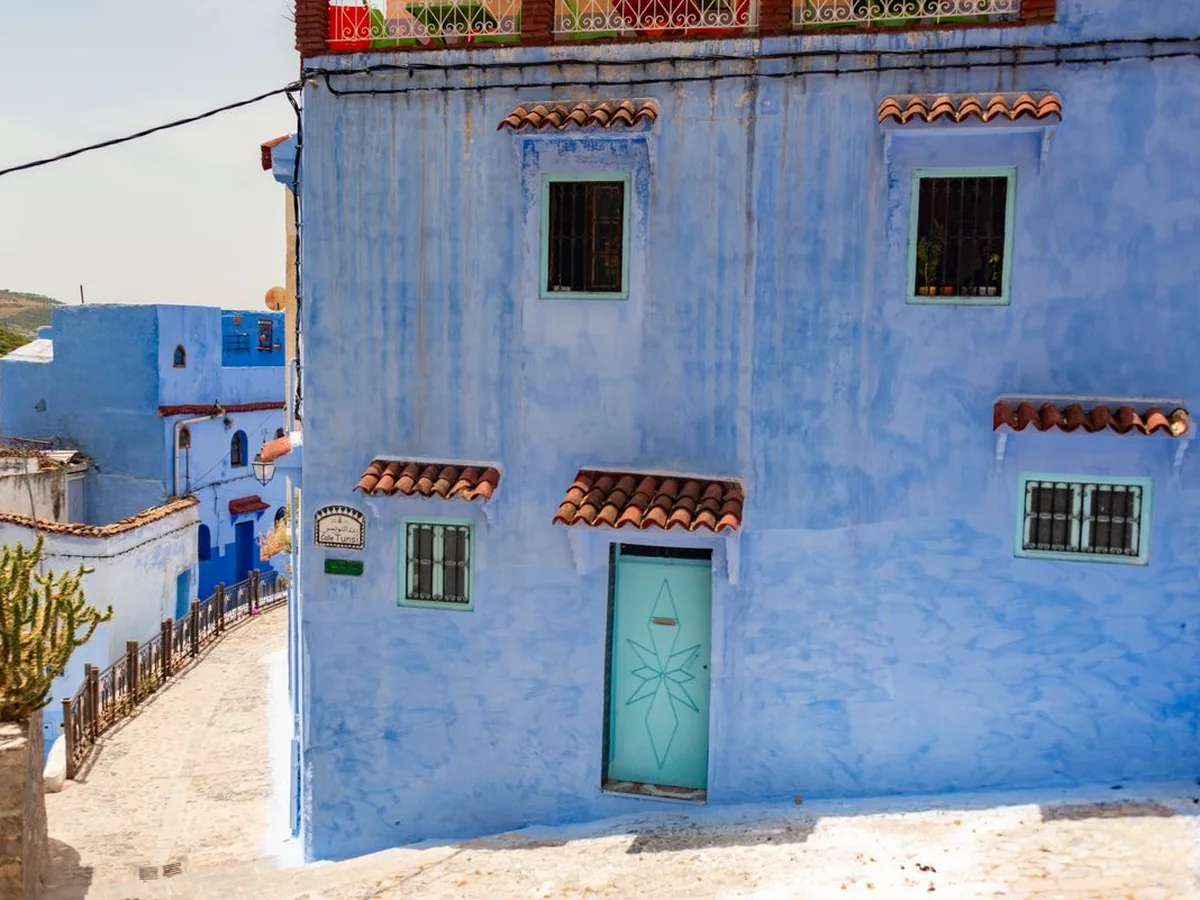
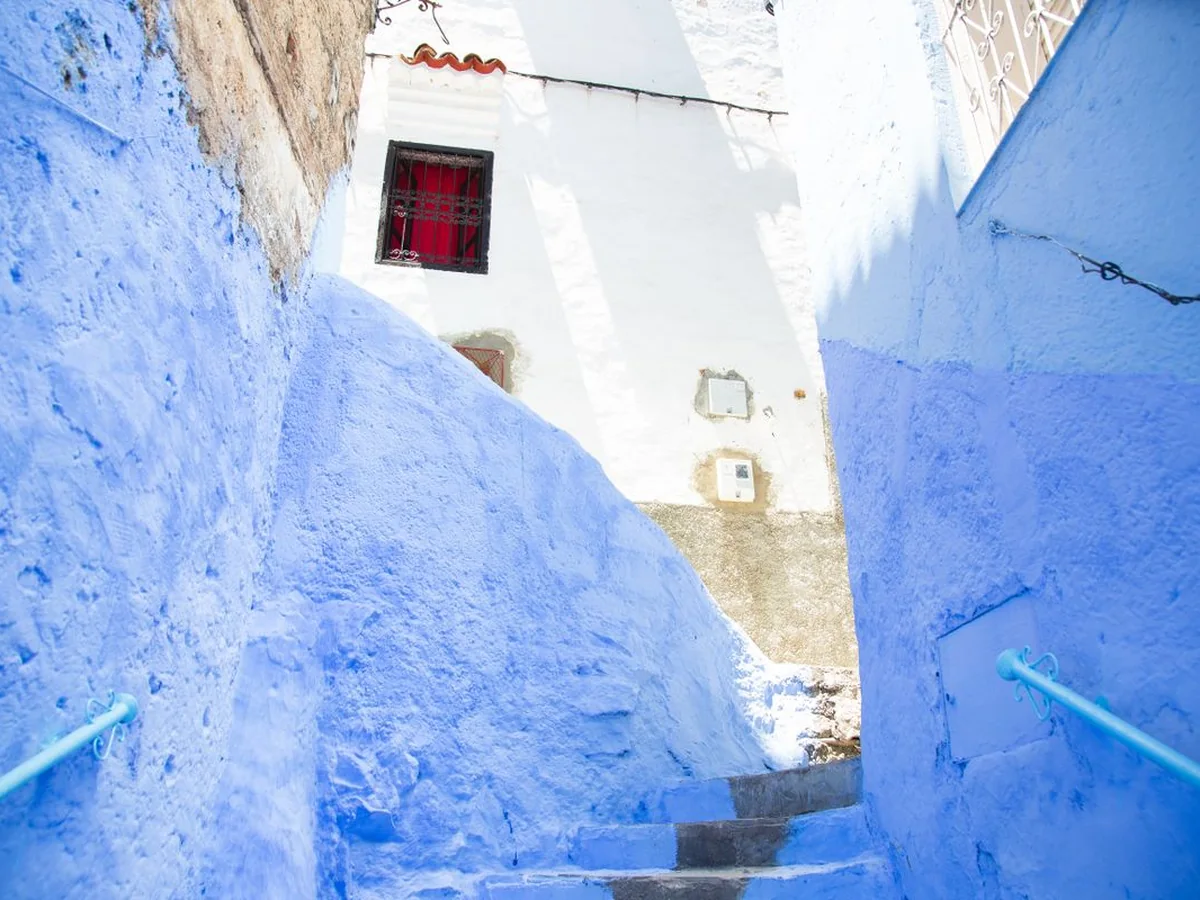
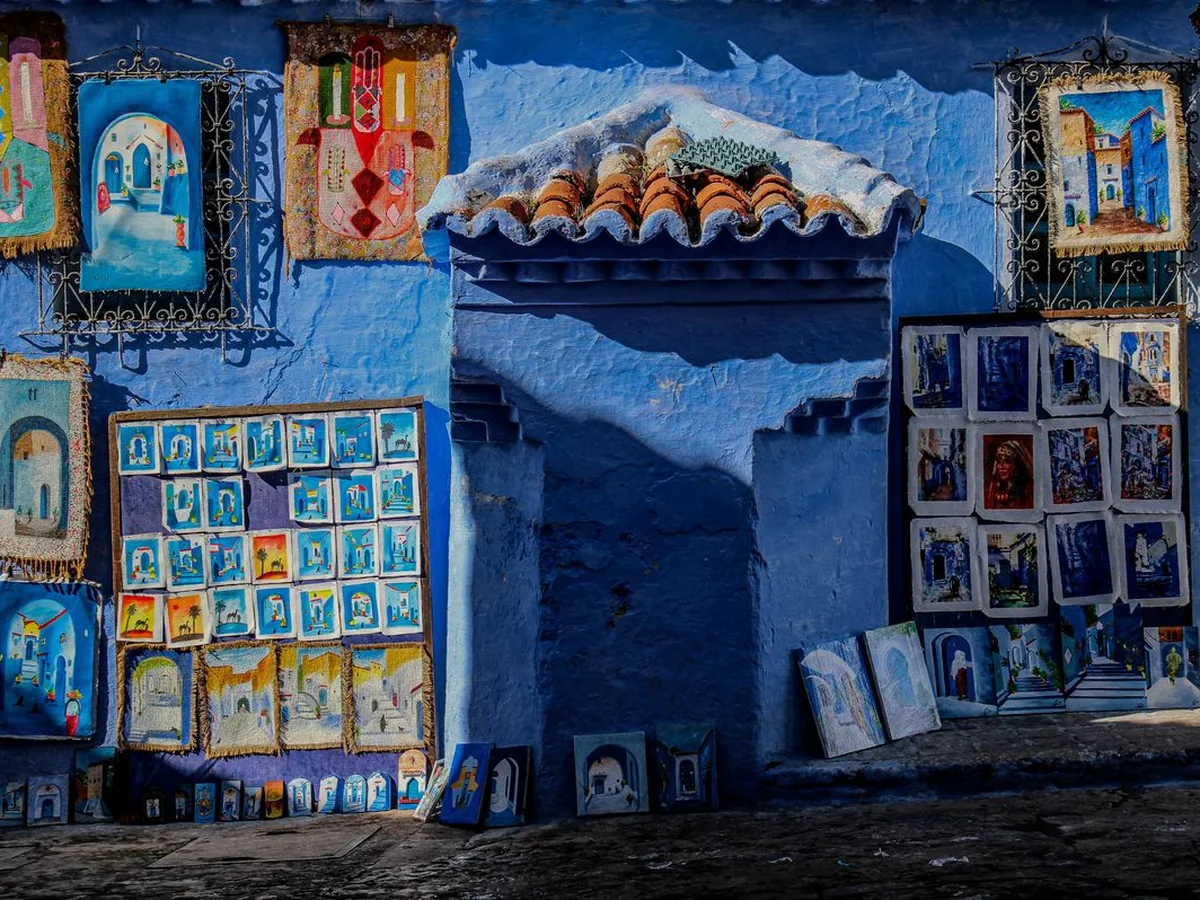
The medina's stepped blue lanes, a quiet stairway between whitewashed and indigo walls, a painted corner near the upper town, and local artwork hung against a blue wall.
Ways to do this trip
Ways to do this trip
| Option | What it includes | Good to know |
|---|---|---|
| Shared small-group day trip, Fez pickup | Guide and round-trip transport for the full day | The listing this site is built around — about 12 hours, door to door |
| Private tour from Fez | The same route and stops, with a smaller or private group | Costs more; worth it if sharing a minibus for the day isn't what you want |
| Day trip from Tangier | A shorter drive to Chefchaouen, starting from the north coast instead | A different itinerary — only worth comparing if Tangier, not Fez, is your base |
| Getting there independently | None of the guide or transport handling | Grand taxis and buses run from Fez, but without a booked seat, a fixed schedule or a guide |
Ways to book the day
Find a date for the trip
Every option below is booked through GetYourGuide, with live availability and the final price in your own currency.
Planning the day
Planning the day
Dress for a mountain town, not for Fez
Chefchaouen sits higher and cooler than Fez, and its stepped lanes involve real walking on uneven stone. Comfortable, closed shoes and a layer you can add outdoors matter more here than they would on a flatter city day.
Bring cash for the medina
Small shops, cafés and craft stalls in the medina mostly run on cash rather than card. Withdraw what you expect to spend before leaving Fez rather than counting on finding an ATM once you're in Chefchaouen's lanes.
Ask before you photograph people or doorways
The blue walls make it tempting to shoot everything, but the people living behind them didn't sign up to be scenery. A quick, friendly request before pointing a camera at someone, or into an open doorway, goes a long way in a town that sees this much daily tourist traffic.
Book ahead if a specific date matters
Free cancellation up to 24 hours before means an early booking costs nothing to hold, and the shared vehicle only runs once a day each way — securing the date first and adjusting plans later is the lower-stress order to do it in.
Planning a Chefchaouen day trip
Planning a Chefchaouen day trip
The Chefchaouen day trip from Fez, hour by hour
An early pickup, roughly seven to eight hours of driving through the Rif, and four hours to actually be in the blue town — here is the shape of the day.
Read more →The town, explainedWhy is Chefchaouen blue? The competing explanations
Three different stories are told about the same blue paint, and none of them has fully displaced the others — here's what each one actually claims.
Read more →The landmarks, explainedPlaza Uta el-Hammam, the kasbah and Chefchaouen's medina, explained
What you're actually looking at at each of the medina's core stops — the square, the citadel, the spring and the viewpoint above it all.
Read more →Practical questionsEtiquette, photography and Chefchaouen as a lived-in town
The blue walls make every corner look like a photo opportunity — here's how to walk through them without treating the people who live there as scenery.
Read more →Choosing your routeChefchaouen from Fez vs from Tangier: which hub to book from
Both cities run day trips to the same blue medina. Here's what actually differs between them, so you book from the one that fits your itinerary.
Read more →Around FezFez beyond Chefchaouen
The Chefchaouen day takes a full day on its own. Here's how it sits alongside the rest of a Fez trip, and what to do with the days either side of it.
Read more →FAQ
Chefchaouen day trip questions
What is the Chefchaouen day trip from Fez?
It's a full-day shared small-group trip from Fez into the Rif Mountains to Chefchaouen, the blue-painted medina, with a guide and round-trip transport included on the listing this site is built around. Pickup is from central Fez hotels and riads, and the day runs roughly 12 hours door to door.
How long does the drive take, and how much free time do I get?
The drive is roughly 3.5 to 4 hours each way, with about 4 hours free in Chefchaouen itself to walk the medina at your own pace before the return departure. There's one short comfort stop for water and a bathroom break on each leg.
Is it better to visit Chefchaouen from Fez or from Tangier?
It depends where the rest of your trip is based. Fez is the longer drive but the more common base for a Morocco itinerary that also covers the imperial cities; Tangier sits closer to Chefchaouen and suits a northern-coast or Spain-adjacent trip better. Book from whichever city you're actually staying in rather than adding an extra transfer.
What will I actually see in four hours?
Most visitors cover Plaza Uta el-Hammam, the kasbah and its small museum, a walk through the photo-famous blue lanes above the square, and the Ras el-Maa spring at the medina's edge. The Spanish Mosque viewpoint above the town is also reachable but takes over an hour round trip, so it's a trade-off against a slower walk through the lower medina.
Why are the buildings painted blue?
There's no single settled answer — accounts tie the colour to the town's historic Sephardic Jewish community and its spiritual associations with blue, to a folk belief that the paint repels mosquitoes, and to a more recent claim that widespread blue-washing only became common in the 1970s to draw tourists. All three explanations are still told locally, and none has fully displaced the others.
Is this a long day worth doing with children?
It's a genuinely long day — roughly seven to eight hours of that total spent driving — so it suits families comfortable with a full day on the road more than those looking for something light. The medina itself is built up a steep hillside, so expect steps and slopes throughout rather than flat, easy walking; Plaza Uta el-Hammam and the lower lanes near it are the gentlest ground, while the upper photo lanes and the Spanish Mosque climb are noticeably steeper.
Can I cancel if my plans change?
The listing offers free cancellation up to 24 hours before the start time for a full refund, and many options let you reserve now and pay later. The exact terms for your specific booking are shown on GetYourGuide before you pay.